Patio Cover or Pergola? How Houston Homeowners Choose
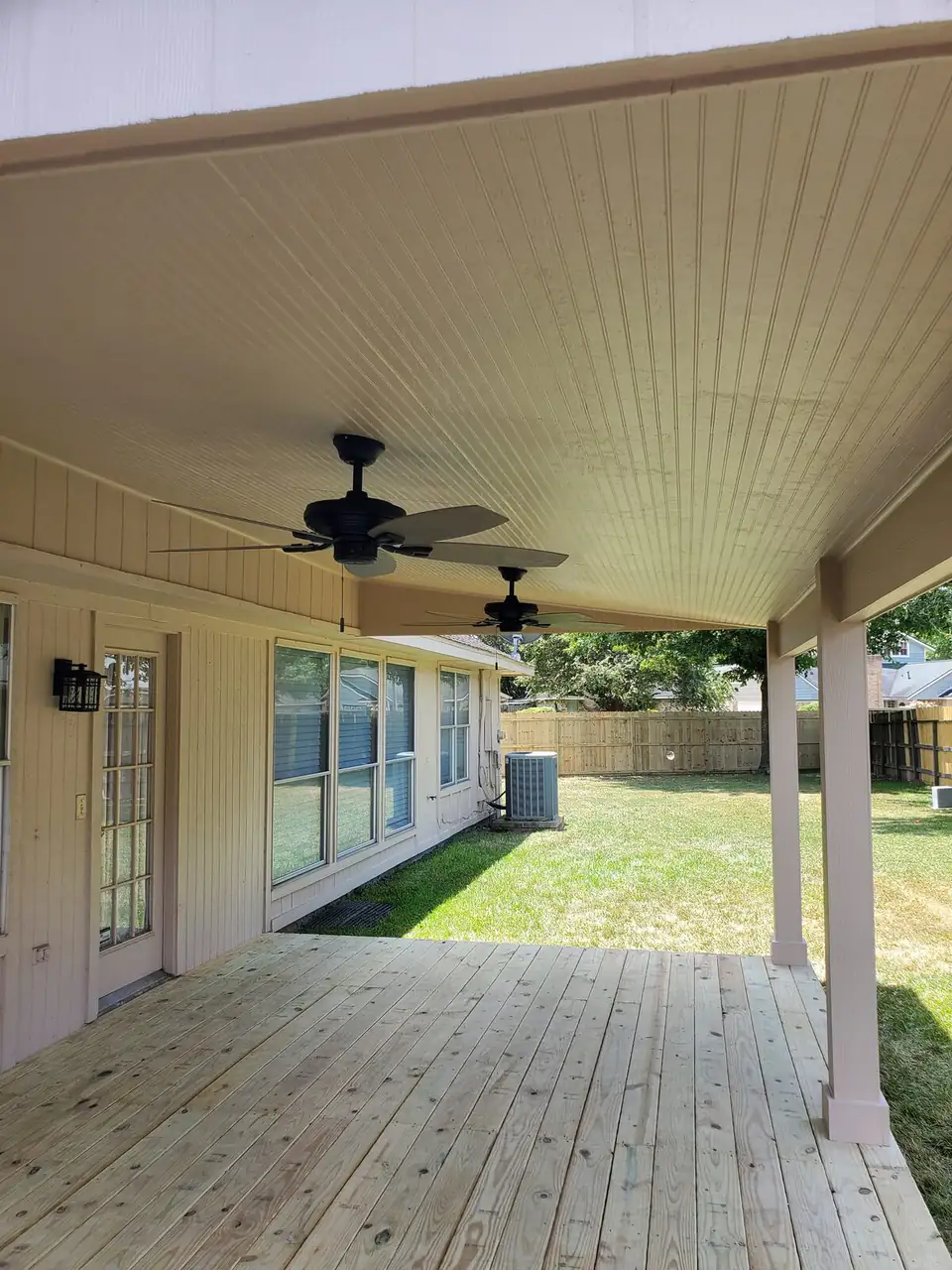
Choose a solid patio cover if you want real shade, a dry place to sit through a Gulf Coast downpour, and ceiling fans; choose a pergola if you want filtered light, an open feel and a lower-cost structure; choose a screened or enclosed patio if mosquitoes are the reason you don't use the backyard. Around Houston, the deciding factors are usually sun exposure, rain, bugs — and how the new structure ties into your existing roof.
Triple G Roofing & Construction builds patio covers, pergolas, enclosed patios, decks and fences across the Greater Houston area — Porter, Humble, Spring, Atascocita, Kingwood and dozens more communities — and has done so alongside roofing since 1973. Because we're roofers first, the part of a patio project most builders get wrong is the part we do every day: the roof tie-in.
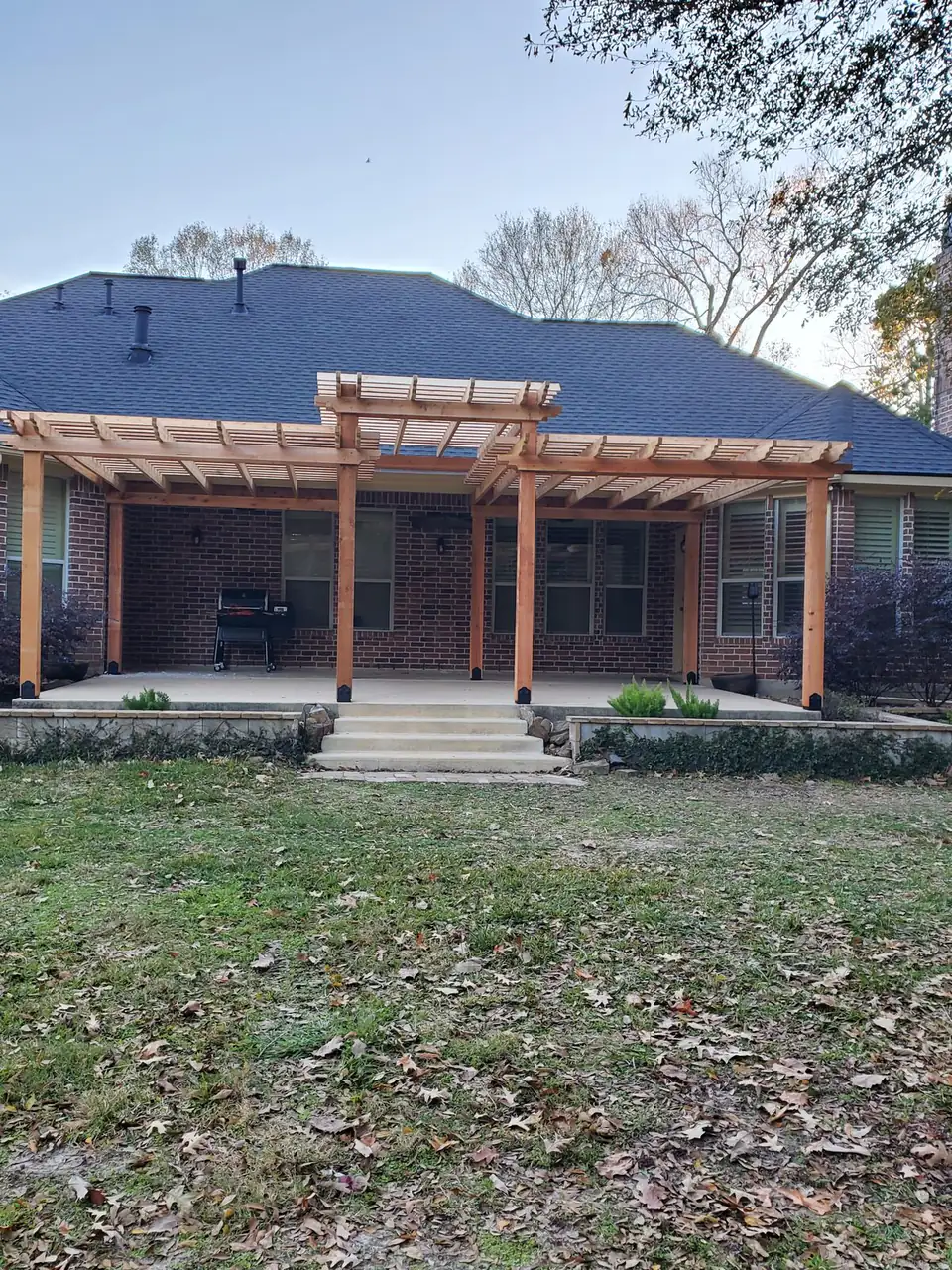
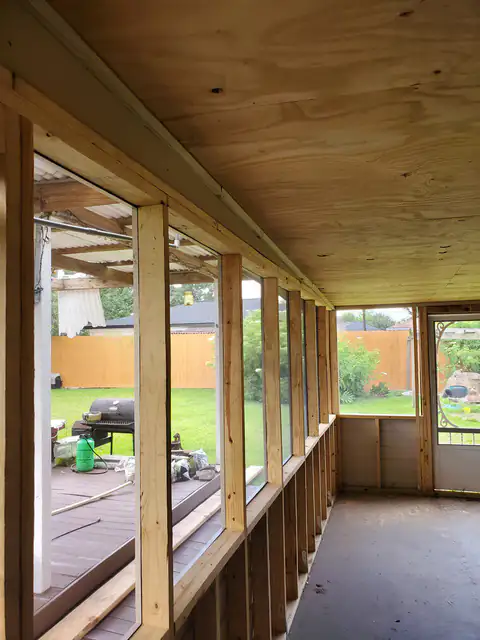
What are the three options, really?
How do sun and rain change the decision?
A west- or south-facing patio in Houston is unusable on a July afternoon without solid shade; filtered pergola light looks beautiful but still bakes. If the patio faces east or sits under mature trees, a pergola's partial shade may be all you need. Rain is the other half: our storms arrive fast and heavy, and a pergola simply doesn't keep the furniture dry. Homeowners who want to use the space through summer storms almost always land on a solid cover, which is also where ceiling fans become possible — and fans are what make a Houston patio comfortable in August.
Why the roof tie-in matters more than anything
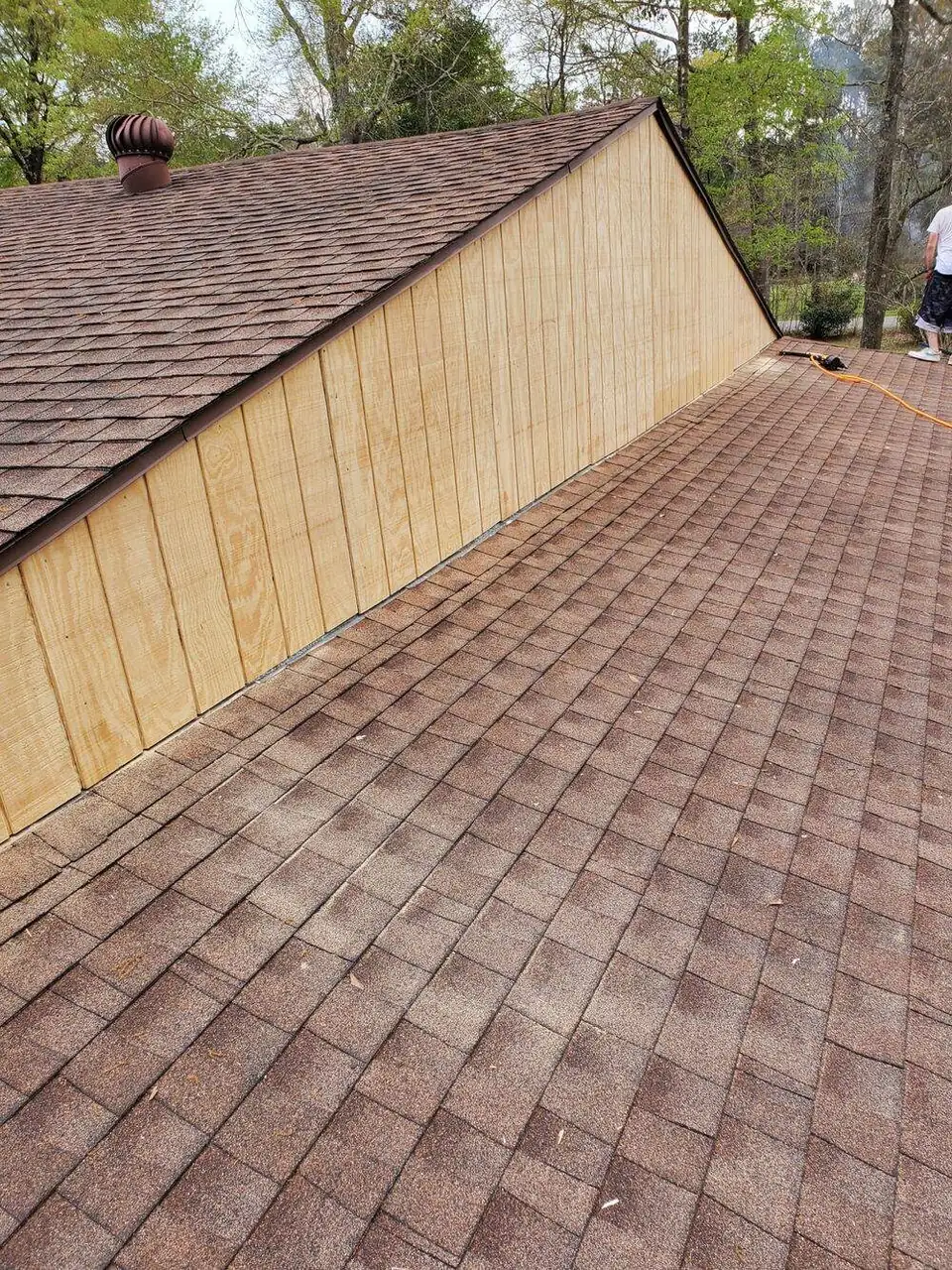
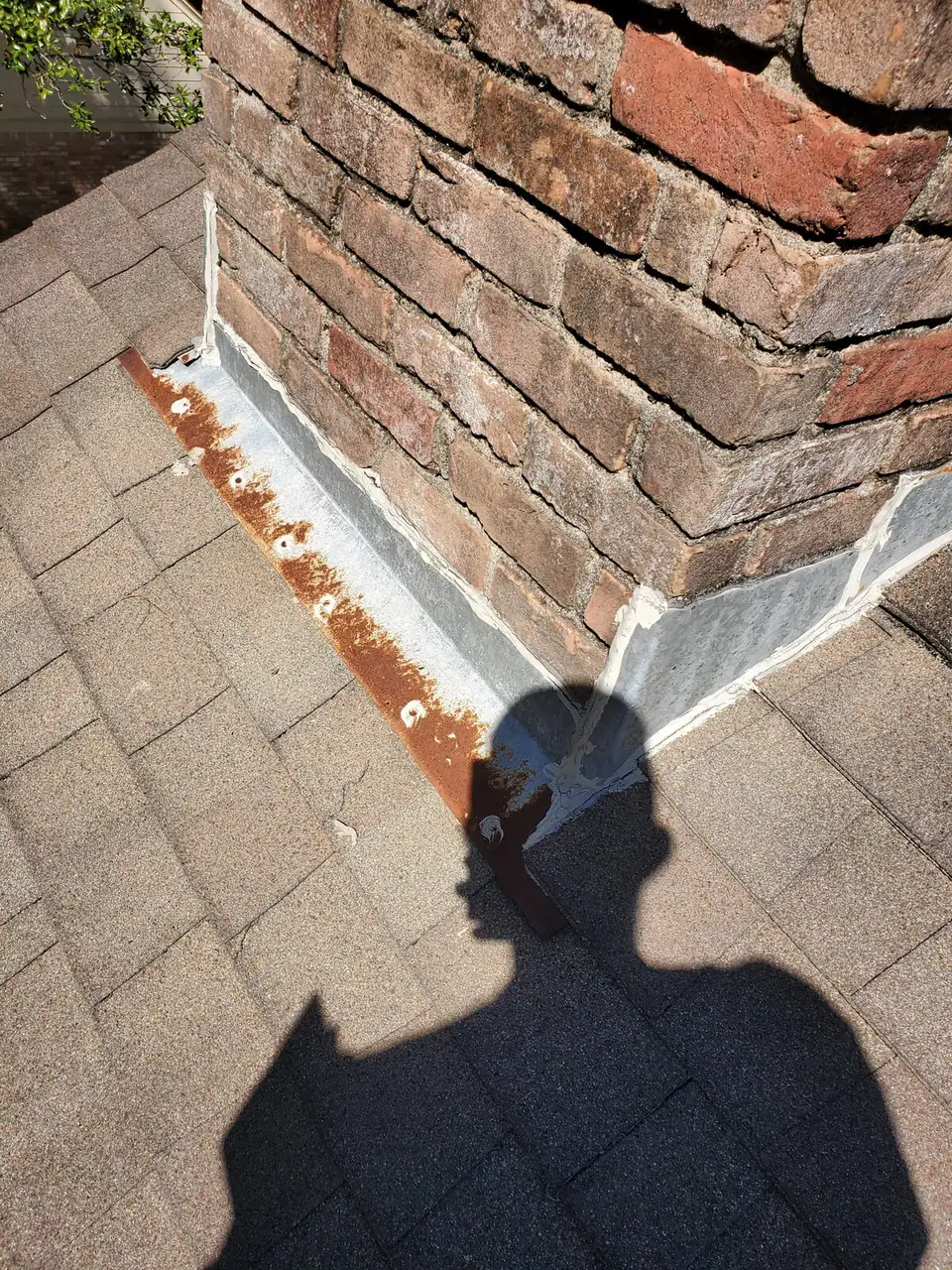
Most patio covers attach to the house, and the seam where the new roof meets the old one is where leaks start. Done right, the cover's flashing is woven into the existing shingles or siding so water runs over it, never behind it; done wrong, you get a stain on the living-room ceiling a year later and a rotted ledger board behind the cover. This is the single best reason to have a roofing contractor build a patio cover. It's also worth checking the condition of the existing roof before attaching anything to it — a free inspection tells you whether the house roof has a few years left or should be replaced first, and how long roofs last in Texas heat explains what to expect. If the existing roof has hail damage, spot it before you build, not after.
“They did a patio roof extension and to be honest I had a concept in mind, Tim expanded on it and gave me some great advice on how to do it right. It turned out great. They matched the trim and everything perfectly.” — Ralph, Porter, TX
Which materials hold up in the Gulf Coast climate?
- Cedar — the standard for pergolas and exposed beams; naturally rot- and insect-resistant, ages to silver or takes stain well
- Pressure-treated pine — the budget workhorse for posts, deck framing and privacy fencing; needs sealing to look its best
- Shingle cover roofs — match the house exactly; same underlayment and flashing rules as the main roof
- Metal cover roofs — lighter, sheds rain loudly and fast, and works well for larger spans and poolside structures (we've converted thatch palapas to metal for exactly this reason)
- Beadboard ceilings, fans and lighting — the finishing touches that make a solid cover feel like an outdoor room
Siding and trim matter too: matching the new cover's fascia, soffit and paint to the house is what makes it look original rather than added on. Our siding comparison covers the exterior finish side.
Should the deck and fence be part of the same project?
Often, yes. A patio cover over a cracked slab or an old deck is a half-finished project; a new wood deck under the cover, and a cedar or pine privacy fence around the yard, are frequently built in the same scope — one crew, one schedule, one estimate. Drainage belongs in that conversation as well: a new cover sheds a lot of water, and gutters on it keep that water off the deck and away from the foundation.
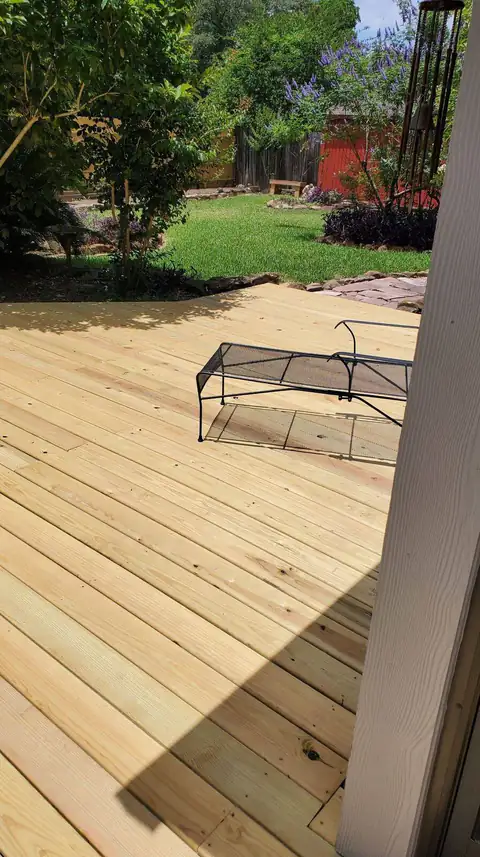
“Tim and the Triple G team have been back several times since they installed our roof. New gutters after the roof of course. Then they replaced about half of the privacy fence along our East boundary line. Then they tackled the new pergola over our patio. Three more jobs well done and we are quite pleased with the results.” — Randy & Charlene, Huffman, TX
What should you ask before you build?
- How will it tie into my roof? Ask to see how the flashing will be integrated.
- Shingle or metal roof, and why? The answer should reference span, look and how the house roof is built.
- What about HOA rules and permits? Many Greater Houston neighborhoods require approval — check with your HOA and municipality early.
- Will it match the house? Trim, fascia, paint and shingle color should all be specified in the estimate.
- Is it in writing? Get a free written estimate that lists the structure, roofing, electrical rough-in for fans, and any deck or fence work.
Ready to use your backyard again? Call Triple G Roofing & Construction at (281) 570-3325 or request a free estimate online. The owner is on every job, and no job is too big or small.
Patio cover and pergola FAQ
What is the difference between a patio cover and a pergola?
A patio cover has a solid roof — shingle or metal — that blocks sun and rain completely and can carry fans and lights. A pergola is an open structure of beams and rafters that gives filtered shade and an airy feel but does not keep rain out. A screened or enclosed patio adds walls and screens to a solid cover.
Can a patio cover be attached to my existing roof?
Yes, and that tie-in is the most important detail on the whole project. Where the new cover meets the house, the flashing has to be integrated with the existing roof so water cannot get behind it. That is why it helps to have a roofer build it — Triple G Roofing & Construction has done both since 1973.
Does Triple G build decks and fences too?
Yes. Triple G Roofing & Construction builds patio covers, enclosed and screened patios, pergolas, wood decks, cedar and pine privacy fences, ranch rail and custom gates across the Greater Houston area, and provides a free written estimate for any of them.